Make a one-time donation
Make a monthly donation
Make a yearly donation
Choose an amount
Or enter a custom amount
Your contribution is appreciated.
Your contribution is appreciated.
Your contribution is appreciated.
A juror in Lindsay Clancy’s murder trial is offering new insight into how deliberations gradually shifted from a 10-2 divide to the final 11-1 split that resulted in a mistrial. Paula Devlin, who ultimately supported finding Lindsay Clancy not guilty by reason of lack of criminal responsibility, acknowledged that the two dissenting jurors may have felt pressured as the majority attempted to reach a unanimous decision.
Jurors spent a week weighing murder and manslaughter charges against Clancy’s mental health defense.
Paula appeared on “CBS Mornings” and spoke with Gayle King about her experience deliberating the high-profile case. She said, “We all worked together to convince ourselves. “And once we got to that point where it was 10-2, it was really hard. I felt very bad for them, because they felt attacked, and there’s no way to not do that.”
The vote later moved to 11-1, with Devlin and 10 other jurors reportedly supporting a finding of not guilty by reason of lack of criminal responsibility. The remaining juror refused to join them, leaving the panel unable to reach the unanimous decision required for a verdict.
Jurors could have found Clancy guilty of first-degree murder, second-degree murder or manslaughter. They could also have found her not guilty or not guilty by reason of lack of criminal responsibility.
Another juror, Nick Dargie told “Good Morning America” that the lone holdout sometimes “wouldn’t engage” with the other members of the jury.
He also alleged that the juror used an exercise band to reenact how Lindsay Clancy strangled the children. He said, “I was shocked. “We’re not in here to play detective. It’s not a game of Clue.”
Lindsay’s attorney, Kevin Reddington, strongly criticized the holdout after the trial ended without a verdict. He claimed the juror failed to follow Sullivan’s instructions and did not properly apply the reasonable doubt standard.
The defense unsuccessfully asked the court to question or remove the juror before the mistrial was declared. However, disagreement alone is not grounds for removing a juror. A person serving on a criminal jury has the right to maintain an opposing position if that conclusion is based on an honest evaluation of the evidence and the judge’s legal instructions.
One juror from Lindsay Clancy’s murder trial has spoken publicly about the jury’s bitter deliberations, revealing that she initially believed Clancy was guilty and criminally responsible for killing her three children before changing her position because she felt there was too much reasonable doubt.
And another Juror, said she entered deliberations believing Lindsay should be found guilty and criminally responsible for the deaths of Cora, Dawson and Callan. But after considering the evidence, she said she became convinced prosecutors had not established the case beyond a reasonable doubt.
“And maybe I still believe that in a certain way,” she said. “I think that this is a woman who was not mentally healthy. She was someone that was in the throes of a significant mental health crisis.”
But after weighing the evidence, she said she could no longer reach the level of certainty required for a guilty verdict.
“There was too much gray area,” she said.
Ultimately, she said she came to believe that getting Clancy psychiatric treatment was the appropriate outcome.
“I just felt like the only way to get justice for Cora, Dawson and Callan. And Patrick and her parents and everyone else that was closest was to get her to help that she desperately needed,” she said. “And there’s no way she’s getting that help in a prison.”
“At the end of the day, there was so much doubt,” she told the station. “The prosecution didn’t have a figurative smoking gun. There was not a single moment throughout the presentation of that case where you could say ‘Yup, 100% I’m certain she did it’ or that she didn’t do it.”
She said the majority of jurors were attempting to persuade the lone holdout from the beginning of deliberations.
“The majority of the people, it doesn’t matter what side they were on, were very firm in their stance and their belief from the beginning,” she said.
But she also pushed back against the idea that the holdout was uniquely unwilling to reconsider his position.
“The stand-alone juror was not the only one that was unwilling to see things from the other side,” she said.
She described the deliberations as involving “big personalities” and said the dispute ultimately came down to an “inability to move past your convictions.”
The most significant revelation came from the foreperson. She said the holdout eventually acknowledged that he had reasonable doubt about the case. Believing a verdict was finally within reach, she said she began filling out the verdict forms.
She said, “He admitted he had reasonable doubt and I started filling out the forms, I was so excited.”
But, according to the foreperson, the juror then refused to agree to a not-guilty-by-reason-of-insanity verdict.
“But I’m still not going to say that she’s not guilty by reason of insanity,” she said he told the group.
One of the jurors said the holdout repeatedly returned to the fact that Clancy had killed her children, even as the other jurors tried to focus on the legal question of criminal responsibility.
She said: “He had the hardest time getting off the fact that Lindsay viciously killed her children.”
That is potentially one of the most revealing comments because it gets to the heart of the defense’s argument. The question before the jury was not whether Clancy killed her children. The defense acknowledged that, but whether her mental state meant she should be found not criminally responsible.
As jurors continue speaking about the emotionally charged deliberations, Reddington says his client remains under constant supervision. The attorney said that Lindsay is on one-on-one suicide watch following the mistrial. He said, “I worry about her every day.”
Although he noted that Lindsay has strong support from her family, he remains deeply concerned about her mental health as the criminal case remains unresolved. He has also rejected online conspiracy theories accusing Clancy’s former husband, Patrick Clancy, of participating in the children’s deaths.
No evidence presented during the trial established that Patrick was involved. He returned home and discovered the horrific scene after Clancy had sent him out to pick up dinner and medication.
The mistrial did not dismiss the charges against Lindsay Clancy or amount to an acquittal. Prosecutors could pursue another trial because the jury did not reach a verdict. However, the prosecution has not publicly confirmed whether it intends to retry the case. Her defense is expected to continue fighting against another trial as she remains in a psychiatric facility under close supervision.
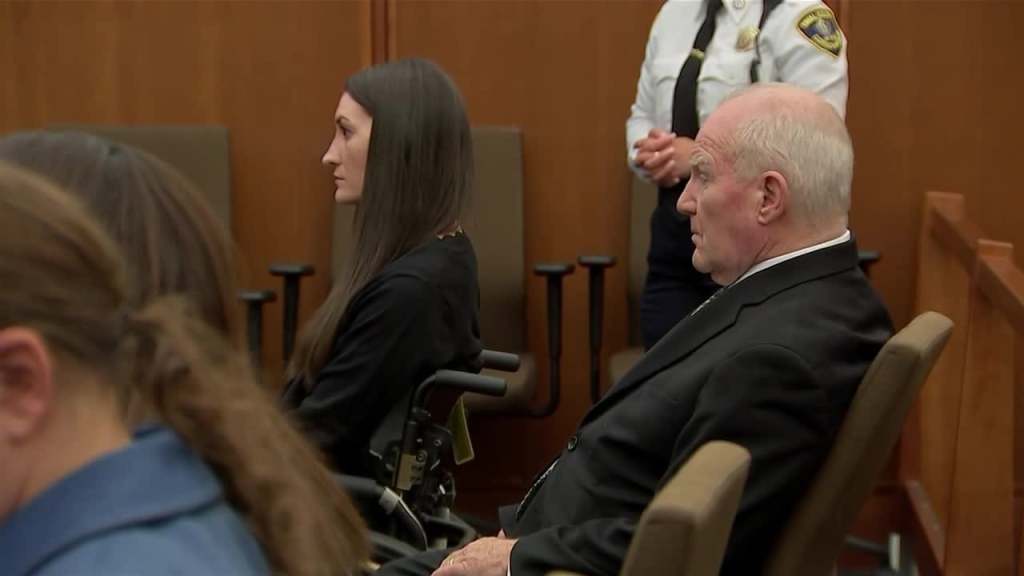
Judge William Sullivan ultimately declared a mistrial after jurors repeatedly reported that they remained deadlocked.
Her next court hearing is scheduled for September 29.


Leave a comment