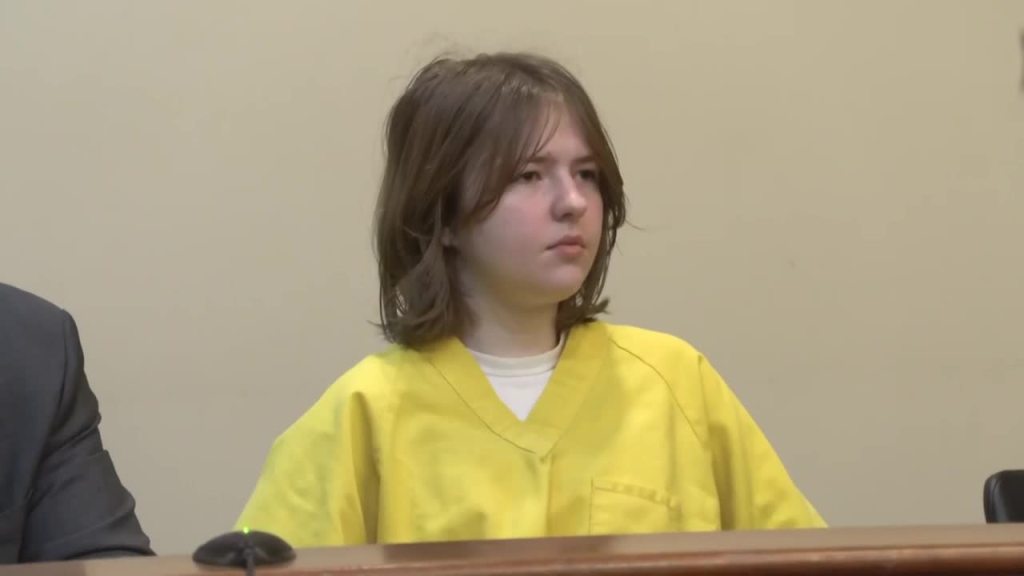
Carly Gregg, 17, was 14 years old when she killed her mother, Ashley Smylie, and injured her stepfather. At her trial, Gregg never denied attacking her parents but argued that she was legally insane at the time of the killings.
What happened was, on the afternoon of March 19, Carly shot her mother, Ashley Smylie, a 40-year-old math teacher in Rankin County, multiple times at their Brandon home. The shooting unfolded in Gregg’s bedroom after Smylie discovered boxes of vape pens there, which prosecutors said were telltale signs of the teen’s “secret life.” That life, the state alleged, involved “burner phones,” vapes containing marijuana, and a history of cheating at school and self-harm by cutting herself.
Kitchen video from the crime scene played during the trial showed Carly hiding a gun behind her back as she walked in front of the camera and towards her bedroom. Moments later, that sounds of three gunshots and Ashley’s screams were heard.
Rather than panicking, Carly reacted calmly and put into motion her next attack, texting on a phone as she sat on a stool in the kitchen while her two dogs hovered below her.
Prosecutors said Carly used her mother’s phone to lure stepdad Heath Smylie to the house by texting “When will you be home honey?” and that she later shot him in the shoulder, before the man wrested the gun away from her. Prosecutors further said Carly texted one of her friends to come over to the house claiming that there was an “emergency.”
Once the friend arrived, Carly allegedly asked “if she had ever seen a dead body before” before leading the witness to the victim’s body and saying her stepfather was next.
Carly’s stepdad took the witness stand and testified about the moment he was ambushed upon arriving home.
He said, “When I opened the door to the kitchen, the gun went off in my face before the door was three or four inches wide open. “The gun flashed in my face. It went off two more times, but my hand was on the gun after the first shot, and I twisted it from Carly.”
He recalled Carly looked as if “she had seen a demon or something” that day and maybe didn’t even recognize him.
While Carly’s attorneys argued that she had suffered serious mental illness, issues that “ran in her family that we know are hereditary,” dissociation and possible side effects from prescribed medications, prosecutors pointed to her deliberate actions after her mother’s death as proof she was sane. After shooting her mother, Carly removed a camera from inside the house, hid it in the refrigerator, and then invited several friends over. One friend testified Carly told her that “she had shot her mother three times and had three more shots for her stepfather when he came home.”
In their appeal, Gregg’s attorneys had argued that Judge Dewey K. Arthur, who presided over the trial, had imposed an accelerated schedule that left the defense unprepared. While recognizing that Arthur’s comments about not allowing continuances pretrial were ill-advised, the state supreme court justices ultimately found that Gregg’s appeal failed to “show how the outcome would have been different at trial had a continuance been granted.” The decision also notes that Gregg’s defense never actually filed a formal motion to continue the trial.
The justices similarly dismissed claims that a witness’s reference to the novel “Crime and Punishment” was inappropriate, saying, “The error did not affect the verdict. The evidence that Gregg committed the acts was overwhelming, and the evidence that she understood the nature and wrongfulness of her acts was substantial.
Gregg’s appeal had challenged the legality of her life sentence imposed by the jury. The jury was given the option to sentence her to life in prison, sentence her to life with the possibility of parole, or declare that it was unable to reach a decision. The jury unanimously recommended she be sentenced to life in prison.
Gregg’s appellate attorneys argued that sentencing a juvenile to life without the possibility of parole is not legal, but the justices found that the jury hadn’t specifically sentenced her to life without the possibility of parole, but merely “life in prison,” while noting that the jurors had the option to ensure she was given an opportunity for parole.
Gregg is currently housed at a youthful offender facility, according to prison records.
Make a one-time donation
Make a monthly donation
Make a yearly donation
Choose an amount
Or enter a custom amount
Your contribution is appreciated.
Your contribution is appreciated.
Your contribution is appreciated.


Leave a comment